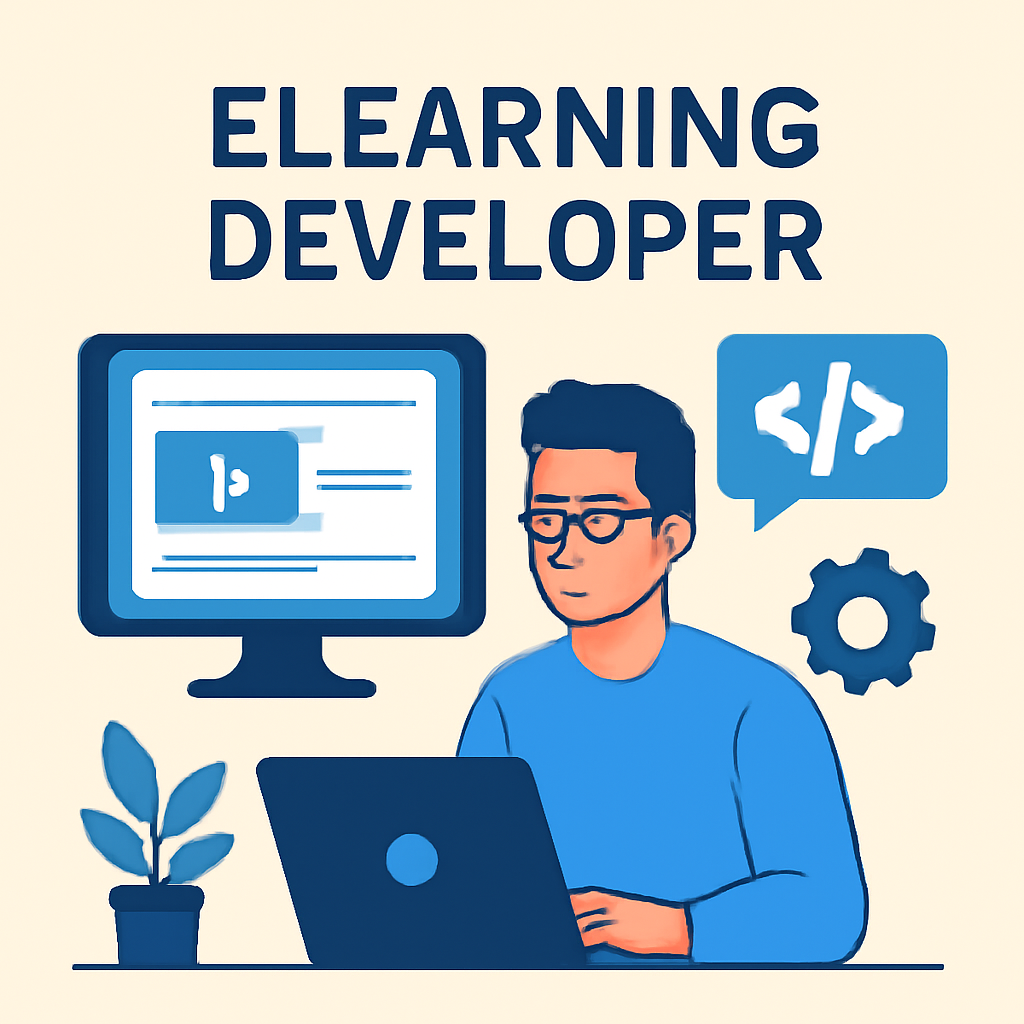
An eLearning Developer is a professional responsible for creating, designing, and delivering online learning experiences. These developers combine educational principles with technology to produce interactive, engaging, and effective online courses or modules.
Key Responsibilities and Services Provided by an eLearning Developer:
- Course Design & Development:
- Creating engaging, interactive, and informative eLearning modules.
- Designing curriculum, quizzes, and assessments tailored to the learners’ needs.
- Developing multimedia content (videos, audio, infographics) to enhance learning.
- Using learning management systems (LMS) to upload and manage courses.
- Instructional Design:
- Applying pedagogical theories to develop effective learning materials.
- Designing user-centric and accessible content for different learning styles.
- Creating storyboards, scripts, and prototypes for modules.
- Interactive Elements:
- Adding simulations, quizzes, and gamified elements to improve engagement and retention.
- Designing interactive scenarios or branching simulations for real-life learning experiences.
- Quality Assurance:
- Testing eLearning content across various devices (PCs, tablets, smartphones).
- Ensuring SCORM (Sharable Content Object Reference Model) and xAPI compliance for interoperability.
- Debugging and resolving technical issues related to course content.
Types of Software Used by eLearning Developers:
- Articulate Storyline:
- A leading software for creating interactive eLearning courses.
- Allows developers to create complex, yet user-friendly learning modules.
- Adobe Captivate:
- Used for creating responsive eLearning content.
- Ideal for developing simulations, scenarios, and assessments.
- Adobe Animate:
- For creating animations to make learning content more engaging.
- Camtasia:
- Software for creating video-based learning materials, like tutorials or demonstrations.
- Lectora:
- A cloud-based eLearning development tool to create SCORM-compliant modules.
- Learning Management Systems (LMS):
- Examples include Moodle, Blackboard, or TalentLMS to deploy and track learners’ progress.
What an eLearning Developer Can Do:
- Develop self-paced, instructor-led, or blended learning experiences.
- Create multimedia-based educational resources (videos, interactive modules).
- Design assessments and quizzes that track learning outcomes.
- Develop eLearning content that is responsive, adaptable to different devices, and accessible to learners with disabilities.
- Optimize and maintain courses based on learner feedback and analytics.
Types of eLearning Modules That Can Be Created:
- Corporate Training Modules:
- Onboarding, compliance, soft skills, and leadership development.
- Technical Skills Training:
- Software tutorials, engineering, coding, or machinery operation training.
- Soft Skills and Personal Development:
- Time management, communication skills, emotional intelligence, and conflict resolution.
- K-12 Educational Content:
- Mathematics, science, language arts, and other subjects for school-age learners.
- Higher Education:
- Modules for college or university courses, including certifications or degree programs.
- Compliance and Certification:
- Legal compliance, healthcare training, financial services, and more.
Learning Outcomes:
- Increased Knowledge Retention:
- Learners retain information better through interactive, multimedia-rich experiences.
- Skill Development:
- Learners develop specific technical or soft skills that can be applied in real-life situations.
- Higher Engagement:
- Interactive and gamified elements ensure learners remain engaged throughout the course.
- Improved Performance:
- Learners can apply what they’ve learned to their jobs, improving performance and productivity.
- Scalability:
- eLearning content can be scaled to reach hundreds or thousands of learners at once.
Represent Services:
- 🖥️ Software tools used (Articulate, Adobe, etc.)
- 📚 Course and content creation
- 🎮 Interactive learning modules (e.g., quizzes, games)
- 🌍 Accessibility and online reach of courses
In conclusion, eLearning Developers use a blend of technology, creativity, and instructional design to deliver effective and engaging learning experiences. They are key players in the education and corporate training sectors, ensuring that content is not only educational but also interactive and engaging.